

Certified contractors are vetted building professionals who hold state licenses, insurance, and often third-party warranties, delivering reliable results for complex projects like custom dream homes. In Central Florida, where homes must withstand hurricanes and high humidity, these experts ensure compliance with local codes while prioritizing quality and transparency.
Table of Contents
- What Are Certified Contractors and Why Do They Matter?
- Benefits of Hiring Certified Contractors for Your Dream Home
- How to Find and Verify Certified Contractors Near You
- Selecting the Right Certified Contractor for Home Construction
- Common Mistakes to Avoid When Hiring Contractors
- Real-World Use Cases: Certified Contractors in Action
- Frequently Asked Questions
Certified contractors are licensed pros backed by additional vetting, warranties, and standards for superior project outcomes.
These professionals undergo rigorous processes including state exams, bonding, and performance guarantees to meet or exceed industry benchmarks. According to modern construction standards, certification distinguishes reliable builders from minimally qualified ones, especially in high-risk areas like Central Florida where wind loads exceed 140 mph and flood elevations are mandatory.
The term encompasses general contractors handling residential builds, renovations, and commercial work. For example, Florida’s general contractor license requires demonstrated competency in codes, safety, and business practices.
Definition and Certification Standards
Certification standards involve initial licensing, ongoing education, and audits. In Florida, this includes passing trade knowledge exams and maintaining liability insurance. Premium providers use time-tested techniques with materials suited to coastal climates.
- Initial vetting: Background checks and financial stability.
- Ongoing requirements: Continuing education on code updates.
- Performance metrics: On-time completion rates above 95% in vetted networks.
Neutral networks like those partnering with Builders FirstSource ensure access to quality supplies.
Difference Between Licensed and Certified Contractors
Licensed contractors satisfy legal minimums for permits, while certified ones add layers like transferable warranties and peer reviews. This distinction supports better risk management in custom projects.
| Aspect | Licensed Contractor | Certified Contractor |
|---|---|---|
| Core Requirements | State exam, basic insurance | Licensing + third-party endorsements |
| Warranty Coverage | Statutory minimums | 1 year workmanship, 2-10 systems, 10-20 structural1 |
| Accountability Tools | Regulatory complaints | Client portals, transparent reporting |
| Project Suitability | Simple jobs | Complex dream homes, renovations |
1 Per industry standards like StrucSure Home Warranty, strucsure.com.
Key Certifications for Home Building Projects
Look for general contractor licenses (e.g., CGC), builder’s risk policies, and structural warranties. Related entities include ICC for code compliance and ENERGY STAR for efficiency. CGC licenses cover broad scopes, while specialized ones like CBC focus on commercial; they interrelate by sharing core competencies in Florida Building Code.
- CGC: Residential/commercial general contracting.
- StrucSure: A-rated 1-2-10 protection with Lloyd’s reinsurance.
- Local endorsements: Hurricane-rated designs.
Hiring certified contractors minimizes risks, ensures code compliance, and boosts long-term value through warranties and expertise.
These benefits manifest in reduced rework costs (up to 20% savings per industry benchmarks) and higher resale values from resilient features. In Central Florida, pros address humidity-driven issues like mold prevention proactively.
Quality Assurance and Warranty Protections
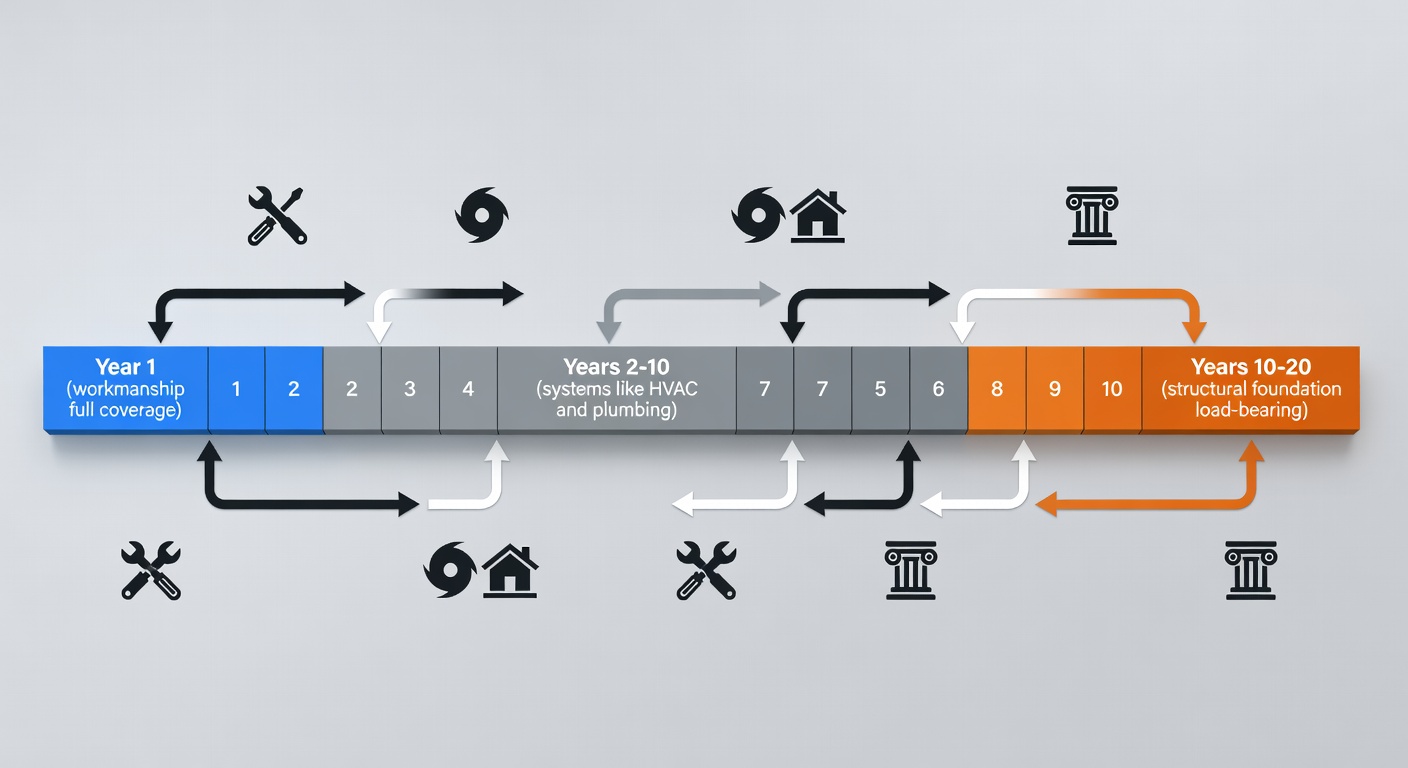
Comprehensive timelines protect investments: Year 1 covers all workmanship/materials; Years 2-10 target electrical/plumbing/HVAC; Years 10-20 safeguard foundations/walls. Transferable to new owners, adding equity.
- Immediate fixes: No-cost during construction phase via builder’s risk.
- Systems reliability: Covers failures in major components.
- Structural longevity: Backed by reinsurance since 1997.
Experienced developers often integrate interactive coverage diagrams for client clarity.
Compliance with Building Codes
Florida codes demand 140+ mph wind protection, elevation for floods, fire-safe materials, and energy standards. Certified teams handle permitting seamlessly, avoiding fines up to $5,000 per violation.
Dependencies: Technical compliance enables on-page features like open lanais.
Access to Vetted Networks Like Fox Certified Contractors
Vetted groups offer full-service from design to finishes. Examples include Builders FirstSource partnerships for materials; others like national associations provide similar supply chains. Fox Certified Contractors Inc. exemplifies with local focus at 1526 Grace Lake Circle, Longwood, FL.
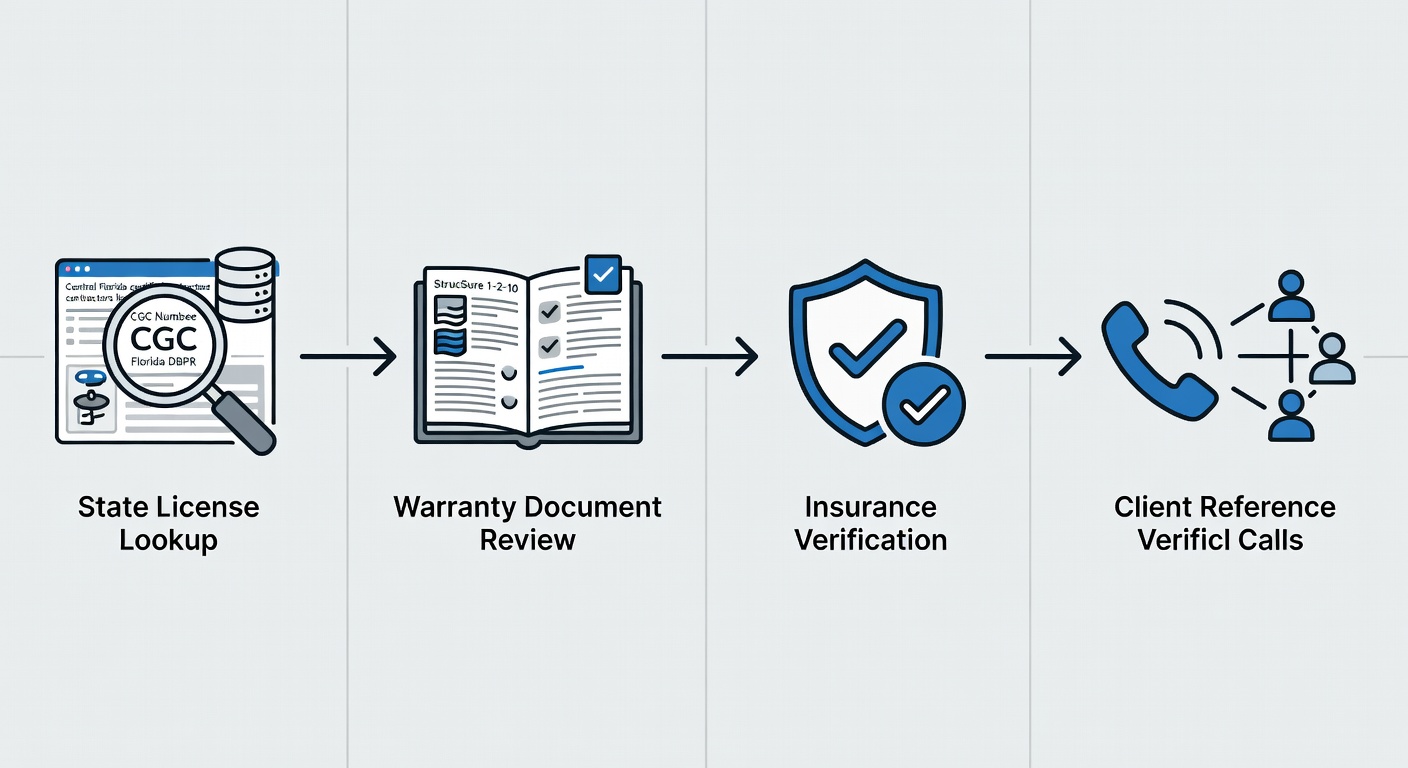
Search state databases, vetted directories, and request proofs to verify certified contractors effectively.
This process typically takes 1-2 hours and prevents 80% of hiring errors. Start with official verifications for active status.
Step-by-Step Search Process
A structured approach yields qualified matches:
- Define scope: New build (1,500-3,500 sq ft common) or remodel.
- Query directories: Angi’s List, local chambers.
- License check: Confirm via Florida verification tools.
- Estimate requests: Free quotes within 24 hours.
- Site visits: Review past work.
Downloadable checklist: Print this list for interviews.
Tools and Databases for Verification
Use Angi’s List Reviews and state portals. Cross-reference insurance via carriers like SHW.
Red Flags in Contractor Credentials
Expired licenses, vague warranties, or no local ZIP (32/33/34) experience signal risks. A common pitfall: Ignoring renewal cycles (biennial in FL).
Assess portfolios, budgets, and contracts to select contractors matching your Florida dream home specs.
Focus on alignment with styles like coastal modern (3,200 sq ft, 4 beds) and budgets $200k-$3M.
Evaluating Experience and Portfolios
Review Florida house plans for open concepts, garages (2-car standard). Prioritize hurricane windows, solar options.
Cost vs. Value Analysis
Total costs include land + construction + finishes. Laminate floors $2-5/sq ft vs. marble $75-200/sq ft countertops.
- Basic kitchen: $15k-25k cabinets.
- Premium appliances: $12k-25k packages.
- Common mistake: Underestimating AC costs for larger homes (higher by 20%).
- ROI tip: Quartz upgrades yield 15% resale boost; permitting $5k-15k.
Case: 2,500 sq ft ranch saved 10% via efficient planning.
Contract Review Best Practices
Detail scopes, timelines, change protocols. Use tools like dream home quizzes for precision.
Avoid unverified credentials, poor references, and mismatched expertise to prevent project failures.
80% of disputes stem from these; proactive checks save thousands.
Overlooking Certification Details
Assume active status; verify CGC renewals every 2 years.
Skipping References and Reviews
Check Angi’s; demand 3-5 contacts.
Ignoring Project-Specific Expertise
Match to must-haves: Pools, offices, elevators. Businesses err by generalists for luxury villas.
Seasoned pros recommend property surveys upfront for 100% lot fit.
Certified contractors deliver via tools like 3D tours and matched plans, as seen in FL successes.
From quizzes selecting modern/farmhouse to compliance-checked estimates.
Dream Home Builds with Fox Certified Contractors
10-step process: Styles (coastal to villa), sizes (1-7.5k sq ft), finishes (quartz/granite), budgets. Outputs: 3D models, PDFs.
Renovation Success Stories
Bathroom plans: Frameless showers, double vanities, $10k-50k ranges. One case: Mid-range update under budget by 12%.
Expert Tips for Seamless Projects
Opt 1-story for accessibility; 2-car garages standard. Integrate Builders FirstSource.
Frequently Asked Questions
What does ‘certified contractor’ mean?
Licensed with added vetting/warranties for accountability.
How can I check if a contractor is certified?
State portals, warranty docs, reviews.
What makes a top Central Florida contractor stand out?
Local code mastery, 1-2-10 warranties, transparent tools.
What certifications should I prioritize for home builders?
CGC licenses, structural warranties, insurance.
How much more do certified contractors cost compared to unlicensed?
5-15% premium offset by savings (e.g., no rework).
What is a CGC license in Florida?
General contractor certification for residential/commercial, verifiable publicly.
Do certified contractors offer hurricane protection?
Yes, standard for FL with 140+ mph ratings.
Ready to build confidently? Get your free estimate or start at the Find Your Dream Home tool today.