

Building custom homes in Florida combines year-round sunshine, resilient designs, and high property values, making Central Florida a top choice for families and retirees as of May 14, 2026. With updated Florida building codes focusing on 140+ mph wind resistance and energy efficiency, selecting licensed contractors like Fox Certified Contractors Inc. (CGC1509392) ensures compliance and quality. This in-depth guide draws from real-world Florida construction practices to cover styles, costs, warranties, and planning tools.
Whether you’re eyeing a coastal retreat or modern ranch in Longwood FL 32750, understanding these elements positions your project for success amid humidity, storms, and growth.
Table of Contents
- Why Choose Florida for Your Custom Dream Home?
- Navigating Florida Building Codes and Hurricane Protections
- Top Architectural Styles Optimized for Florida Living
- Selecting Ideal Home Size, Layout, and Floor Plans in Florida
- Interior Finishes and Premium Upgrades for Florida Homes
- Florida Home Building Costs and Budget Breakdown 2026
- StrucSure 1-2-10 Warranty: Protection for Florida Builds
- Explore Fox Certified Contractors’ Florida House Plans and 3D Tools
- Frequently Asked Questions
Why Choose Florida for Your Custom Dream Home?
Florida excels for custom homes due to its subtropical climate enabling lanai outdoor living, rapid Central Florida growth boosting values, and lifestyle perks like proximity to Orlando and Lake Mary. These factors support resilient, efficient builds tailored to humidity and storms.
Central Florida’s appeal lies in balanced urban-rural access, low elevation flood risks in select ZIPs (32, 33, 34), and retiree-friendly single-story designs. Fox Certified Contractors Inc., located at 1526 Grace Lake Circle in Longwood FL 32750, leverages decades of experience for transparent, on-time projects.
Businesses often err by ignoring lot surveys, causing fit issues; homeowners skip climate-specific ventilation, hiking cooling bills 20%. Prioritize local expertise early.
- Year-round lanais and pools expand usable space
- Property appreciation in Winter Park, Orlando areas
- Premium materials via Builders FirstSource partnership
Central Florida’s Appeal: Climate, Lifestyle, and Growth
Florida’s warmth demands elevated foundations and sealed envelopes, but rewards with golf course views and waterfront options. Central Florida’s expansion favors 1,500-3,500 sq ft homes, optimizing lots and AC efficiency amid 2026 code updates.
Growth in Lake Mary supports workshops in 3-car garages, popular for golf carts. Single-story ranches reduce stairs for retirees, a staple in Florida designs.
Local Expertise from Fox Certified Contractors in Longwood FL
Learn more about their quality-focused story and core values like craftsmanship and transparency on the About Us page. Full-service from estimate to walkthrough minimizes subcontractors.
Common Mistakes New Homeowners Make in Florida
Undersizing for family growth or omitting hurricane windows leads to costly retrofits. Experienced teams recommend uploading surveys via tools like Fox’s configurator for precise fits.
Another pitfall: Overlooking resale warranties; transferable protections like StrucSure add 5-10% value.
Navigating Florida Building Codes and Hurricane Protections
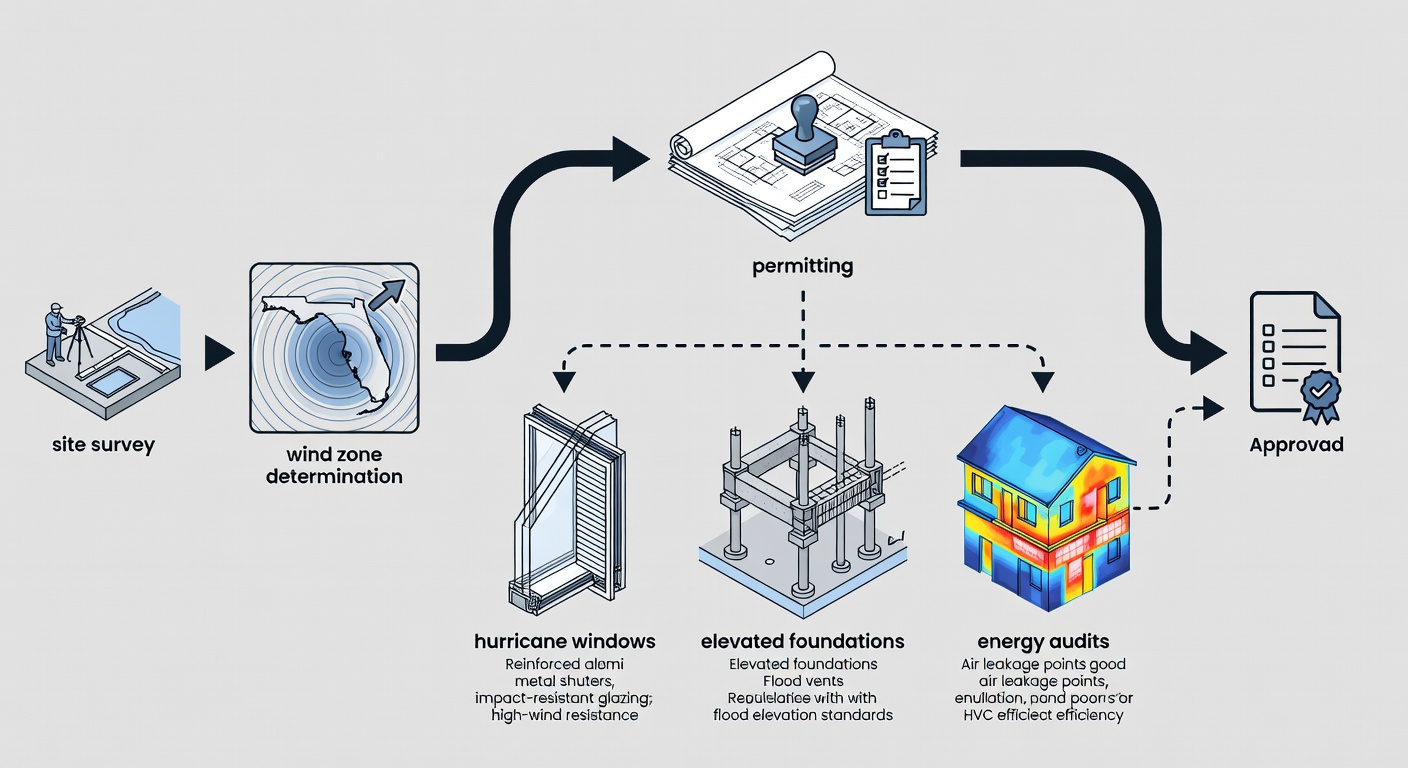
Florida Building Codes require wind ratings up to 140+ mph, flood elevations, and fire-resistant materials, ensuring homes withstand Category 4 storms and humidity. These integrate with energy standards for low SEER AC and insulation.
In Central Florida, codes emphasize concrete block framing and impact glass, per the 7th Edition FBC effective 2023 with 2026 enhancements. Compliance via licensed contractors like CGC1509392 avoids fines and delays.
- Mandatory 140 mph wind loads on roofs/walls
- Elevation for 100-year floods
- High-efficiency HVAC and windows
Key Florida Codes for Wind, Flood, and Energy Efficiency
Wind zones dictate laminated glass; flood rules require breakaways in V-zones. Energy codes mandate 15+ SEER units, cutting bills in humid Florida.
Fire safety uses code-compliant materials like treated lumber. Verify via Florida DBPR portal.
Impact-Resistant Features: 140+ MPH Wind Ratings Explained
Hurricane windows prevent breach by 9-lb debris at 35 ft/s; doors feature multi-point locks. These reduce premiums 20-30%.
Best Practices for Storm-Resilient Construction
Reinforce slabs against uplift; use continuous load paths. Contractors often pair with builder’s risk insurance for phased protection.
Top Architectural Styles Optimized for Florida Living
Coastal, modern, ranch, and Mediterranean styles best suit Florida’s humidity with open plans, light palettes, and ventilation for breezes. These prioritize lanais over enclosed rooms.
Fox plans like the 3,200 sq ft Coastal Modern Retreat exemplify open-concept hurricane-ready designs. Farmhouse adds rustic porches for shade.
- Coastal: Beach tones, textures
- Modern: Minimalist, open
- Ranch: Single-story efficiency
Coastal and Modern: Light, Open Designs for Humidity
Coastal’s light colors reflect heat; modern’s clean lines maximize airflow. Both use large impact windows for views.
Ideal for Orlando suburbs, reducing mold risks.
Ranch and Farmhouse: Single-Story Favorites for Retirees
Ranch low-pitch roofs suit flat lots; farmhouse porches for gatherings. 2-car garages standard for storage.
Mediterranean and Luxury: High-End Florida Villas
Stucco, arches, courtyards with red tiles evoke exclusivity, perfect for pools and private grounds.
<h2 id="size-layout