

Custom home building in Florida demands careful attention to the state’s unique subtropical climate, stringent building codes, and resilient designs optimized for hurricanes and humidity. Central Florida areas like Longwood, Orlando, Winter Park, and Lake Mary provide ideal locations for new constructions featuring energy-efficient systems and outdoor living spaces. As of April 26, 2026, licensed contractors such as Fox Certified Contractors Inc. (License #CGC1509392) deliver full-service projects with StrucSure warranties, ensuring long-term protection and value.
This comprehensive guide covers Florida-specific considerations, from architectural styles suited to coastal conditions to detailed cost breakdowns and compliance requirements, helping you navigate building your dream home in Florida.
Table of Contents
- Why Central Florida is Ideal for Custom Home Building
- Florida Building Codes: Hurricane Resistance and Compliance Essentials
- Best Architectural Styles for Florida Homes
- Optimal Home Sizes, Layouts, and Floor Plans in Florida
- Interior Finishes and Premium Upgrades Tailored for Florida
- StrucSure 1-2-10 Warranty: Protecting Your Florida Investment
- Cost to Build a Custom Home in Florida in 2026
- Choosing a Licensed Florida Contractor: What to Look For
- Bathroom Remodeling Trends and Plans for Florida Homes
- Frequently Asked Questions
Why Central Florida is Ideal for Custom Home Building
Central Florida excels for custom home building due to its booming population growth, diverse lot availability, and established supply chains for hurricane-resistant materials. Locations like Longwood (1526 Grace Lake Circle, FL 32750), Orlando, Winter Park, and Lake Mary combine suburban tranquility with urban access, making them perfect for resilient family homes.
The region’s mild winters and abundant sunshine support expansive lanais and pools, while local expertise addresses challenges like sandy soils and high water tables. In modern Florida practice, builders prioritize elevated foundations and impact-rated windows to mitigate flood and wind risks effectively.
Real-world implementations show that projects here complete on schedule through detailed planning, as seen in Fox Certified Contractors’ approach emphasizing premium materials and transparent communication from estimate to walkthrough.
Unique Climate Challenges and Opportunities
Florida’s humidity and storm frequency necessitate moisture-resistant finishes and ventilation, but opportunities abound for open-concept designs maximizing breezes. A key strategy involves incorporating large porches or lanais for shaded outdoor living, reducing indoor cooling needs by up to 20% according to industry standards.
Common pitfalls include underestimating cooling costs for larger homes; experienced developers recommend sizing HVAC early based on sq ft and insulation.
Popular Areas Like Longwood, Orlando, and Winter Park
Longwood offers spacious lots ideal for ranch-style retirees; Orlando suits growing families with multi-story options; Winter Park attracts luxury buyers with Mediterranean influences. All benefit from ZIP codes (32, 33, 34 series) served by local licensed firms.
- Longwood: Quiet, golf-cart friendly with 3-car garages.
- Orlando: Urban proximity, waterfront potential.
- Winter Park: High-end finishes, tree-lined streets.
Business hours like Monday-Friday 9 AM-5 PM ensure responsive service at (929) 506-7079.
Florida Building Codes: Hurricane Resistance and Compliance Essentials
Florida building codes require all new homes to feature wind protection rated for 140+ mph winds, flood-resistant elevations, fire safety materials, and energy-efficient designs meeting state standards. These regulations, updated regularly, protect against Category 4+ hurricanes and rising sea levels prevalent in Central Florida.
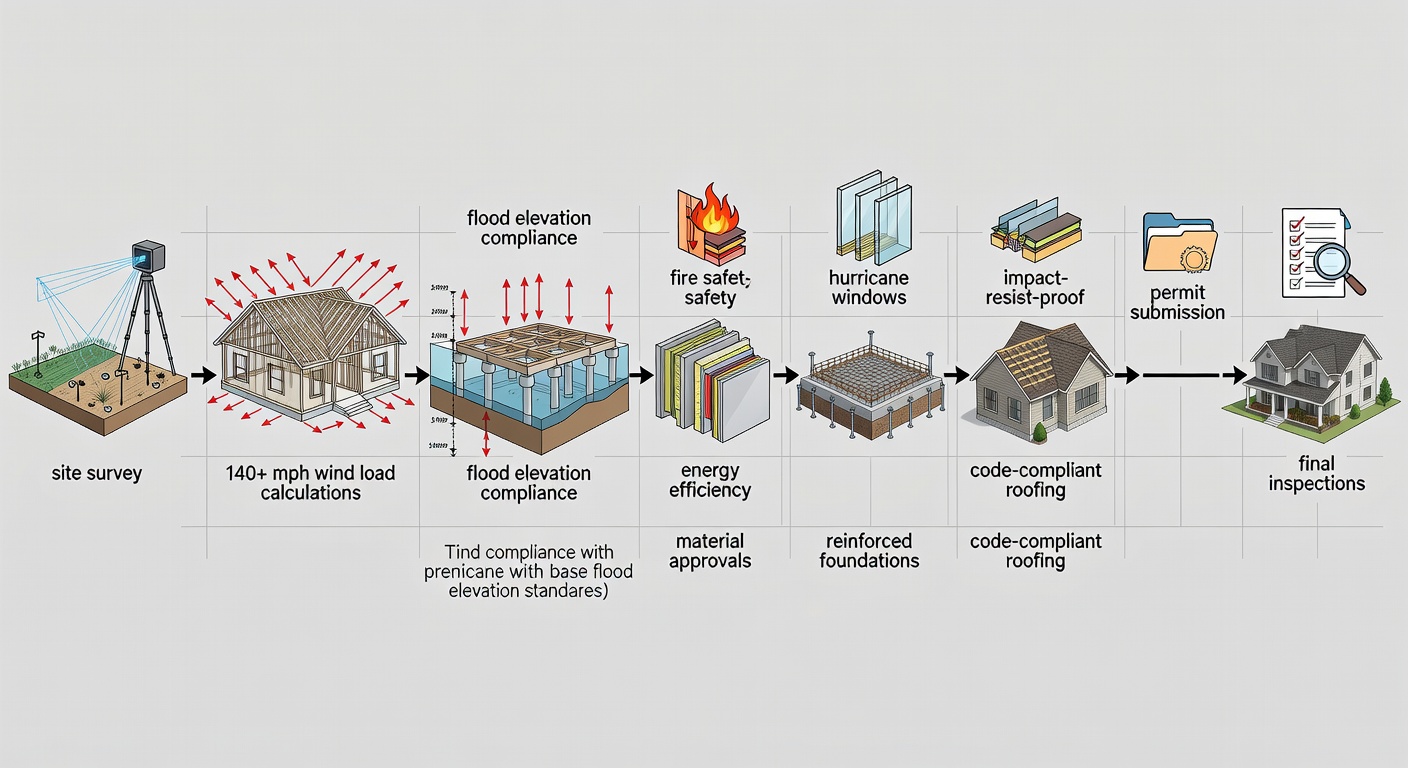
Technical SEO for crawlability ties into code compliance via proper documentation; contractors handle permits in-house for seamless execution.
Wind Protection Rated for 140+ MPH Winds
Florida wind code mandates hurricane-rated windows and strapped roofs for all structures. Impact glass prevents debris penetration, while roof ties secure against uplift. In practice, this adds 10-15% to costs but saves millions in storm damage.
For a 3,000 sq ft home, calculations ensure framing withstands 150 mph gusts.
Flood Resistance and Elevation Standards
Homes must elevate above base flood levels using pilings or slabs; Central Florida zones often require 2-4 ft lifts. Uploading property surveys during planning confirms fit.
Fire Safety and Energy Efficiency Requirements
Non-combustible materials and sealed envelopes achieve Florida’s energy codes, reducing bills by 30% with proper HVAC and insulation.
- Key dependencies: Codes support on-page features like solar-ready roofs.
Avoid skimping on inspections; non-compliance delays projects by months.
Best Architectural Styles for Florida Homes
Top Florida architectural styles include Coastal, Modern, Traditional, Farmhouse, Contemporary, Luxury, Craftsman, Mediterranean, Ranch, Townhome, and Villa, each optimized for humidity, storms, and outdoor integration. These designs feature elevated structures, wide porches, and light colors to combat heat.
According to Florida home configurators, Coastal and Modern lead for their minimalist ventilation.
| Style | Description | Florida Adaptation | Cost Influence |
|---|---|---|---|
| Modern | Clean lines, open spaces | Minimalist, energy-efficient windows | Medium |
| Coastal | Beach-inspired, light colors | Natural textures, hurricane shutters | Low-Medium |
| Farmhouse | Rustic charm, wide porches | Lanais for outdoor flow | Medium |
| Mediterranean | Stucco, tiled roofs, arches | Heat-reflective, durable stucco | High |
| Ranch | Single-story, low roofs | Retiree-friendly, elevated slab | Low |
Coastal and Modern Designs for Beach Vibes
Coastal uses light palettes and textures; Modern emphasizes open minimalist layouts with large hurricane glass sliders. In Central Florida builds, these reduce AC use via cross-breezes.
Farmhouse and Mediterranean for Timeless Appeal
Farmhouse porches become lanais; Mediterranean stucco and arches reflect heat, ideal for sunny exposures.
Ranch and Single-Story for Retirees
Single-story dominates Florida for accessibility; 1.5-story adds bonus rooms over garages without steep stairs.
- Pro tip: Pair styles with must-haves like solar panels for code bonuses.
Interactive 3D tours visualize these perfectly.
Optimal Home Sizes, Layouts, and Floor Plans in Florida
Florida homes optimally range 1,500-3,500 sq ft, balancing space, cooling efficiency, and structural stability for the climate. Layouts favor 3-4 bedrooms, 2-3.5 baths, gourmet kitchens, and 2-car garages with open concepts and additional rooms like offices or pantries.
Most Florida homes are single-story for retirees, while 2-story maximizes small lots; larger require enhanced foundations.
Recommended 1,500-3,500 Sq Ft Range
Typical Florida homes: 1,500-3,500 sq ft to manage higher cooling costs in bigger builds. Min 500-3,000 sq ft; max 1,000-7,500 sq ft per configurators.
Bedrooms, Bathrooms, and Garage Configurations
3 bedrooms average family; 4 growing; garages: 2 standard, 3+ for carts/workshops. Kitchens: Standard quartz to luxury pro-grade.
Must-Have Features: Lanai, Pools, Hurricane Windows
Select from open concept, smart home, lanai, pool, office, solar, hurricane windows. These interact: Lanais extend living; hurricane windows ensure safety.
Follow the 10-step Find Your Dream Home process: 1. Design style (e.g., Coastal), 2. Size/layout (1-story, 2-car), 3. Floor plan (4 beds/3 baths), 4. Finishes (porcelain/quartz), 5. Budget ($300k-$1M), 6. Upgrades (premium cabinets), 7. Must-haves (lanai/pool), 8. Location (ZIP 32750), 9. Matches, 10. 3D details with compliance.
- Step 1-10 generates custom Florida-compliant plans.
Common mistake: Oversizing garages without zoning checks.
Interior Finishes and Premium Upgrades Tailored for Florida
Florida interiors prioritize durable, moisture-resistant options like porcelain tile flooring ($4-12/sq ft) and quartz countertops ($50-120/sq ft) to combat humidity. Premium upgrades scale from basic stock to custom luxury, enhancing resilience and value.
In practice, mixing porcelain with engineered hardwood provides style without warping risks.
Durable Flooring: Porcelain Tile vs. Hardwood
Porcelain tile ($4-12/sq ft): Most durable for Florida moisture. Laminate $2-5 affordable; hardwood $5-15 premium but needs acclimation.
Countertops: Quartz and Granite Cost Breakdowns
Quartz low-maintenance; granite ($40-100) unique; marble ($75-200) luxury. Laminate $20-50 budget.
Kitchen and Bathroom Premium Packages
Cabinets: Basic $15-25k, premium $35k+; appliances $5-25k; fixtures $2-15k/bath. Total upgrades fit $200k-3M budgets.
Entities relate: Finishes support codes via water-resistant choices.
- Upgrade tip: Quartz pairs with coastal styles for seamless durability.
StrucSure 1-2-10 Warranty: Protecting Your Florida Investment
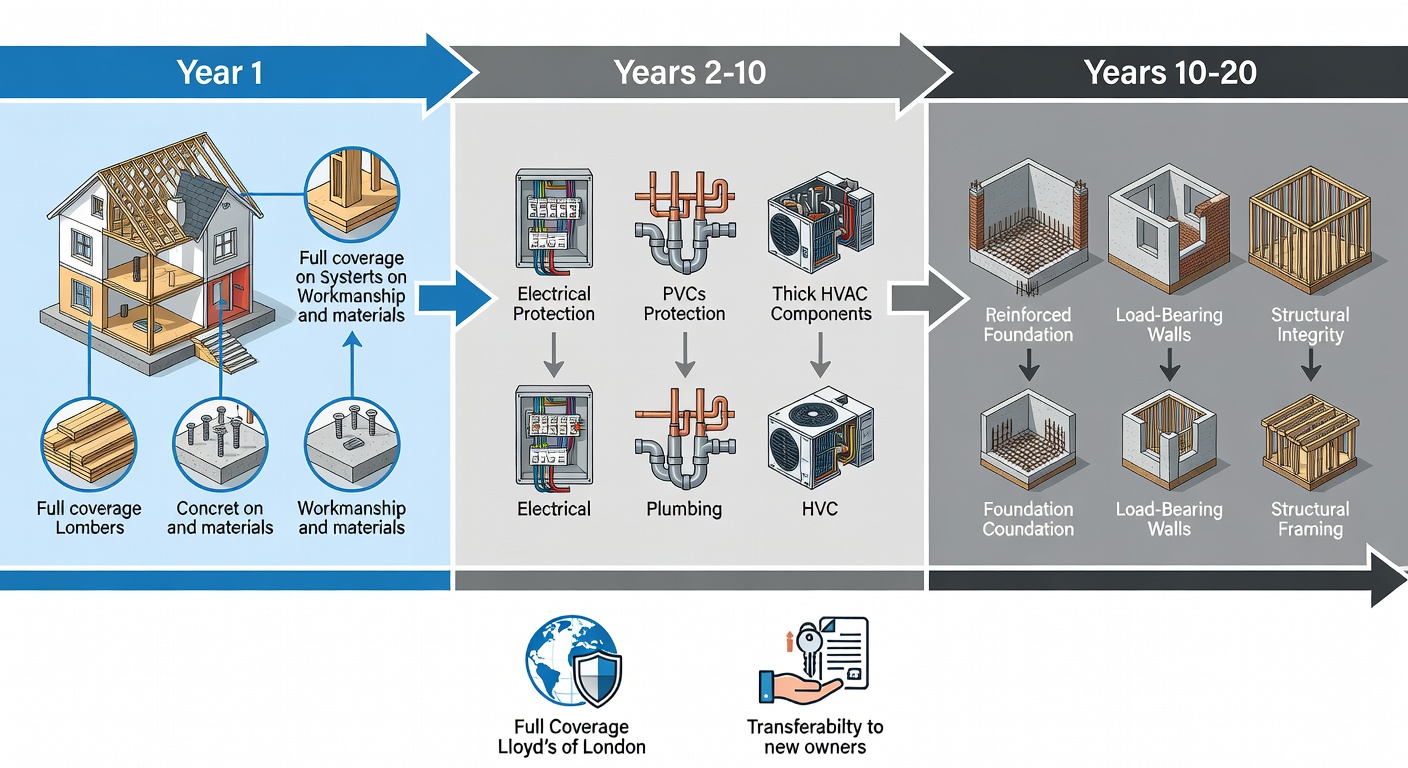
StrucSure Home Warranty offers 1-year full coverage, 2-10 years on systems (electrical, plumbing, HVAC), and 10-20 years structural (foundation, walls, framing), A-rated with Lloyd’s reinsurance since 1997 and fully transferable. Construction phase uses SHW builder’s risk insurance.
This protects against Florida-specific risks like storm damage.
| Year Range | Coverage | Protected Components | Details |
|---|---|---|---|
| Year 1 | Full | Workmanship, materials, systems | No-cost fixes |
| 2-10 Years | Systems | Electrical, plumbing, HVAC | Major failures covered |
| 10-20 Years | Structural | Foundation, load-bearing walls | Transferable value-add |
Year 1: Full Coverage Details
Comprehensive on all elements; we fix at no cost.
Years 2-10: Systems Protection
Covers vital Florida systems prone to humidity wear.
Years 10-20: Structural Integrity
Long-term peace for hurricane-vulnerable components.
- Backed by strucsure.com standards.
Pitfall: Skipping builder’s risk exposes early phases.
Cost to Build a Custom Home in Florida in 2026
As of 2026, Florida custom homes cost $200,000 minimum to $3,000,000 maximum, averaging $300k-$1.5M for 1,500-3,500 sq ft including land, construction, and finishes. Per KB budgets, larger builds factor higher cooling and structural premiums.
Estimates via free forms provide breakdowns within 24 hours.
Budget Ranges from $200K to $3M
Min budgets: $200k compact, $1M luxury; max $500k-$3M full projects.
Per Sq Ft Breakdowns and Hidden Costs
$150-300/sq ft typical; hiddens: Elevations +10%, pools +$50k. Visit get-your-free-estimate.
Financing and Estimate Process
Transparent: Form submission, 24hr contact, detailed PDF with compliance.
- 2026 tip: Factor 5% inflation on materials per Builders FirstSource.
Choosing a Licensed Florida Contractor: What to Look For
Choose Florida-licensed (e.g., CGC1509392), insured contractors with local Central Florida expertise, full-service capabilities, and warranties like StrucSure 1-2-10. Partnerships with Builders FirstSource ensure premium, code-compliant materials.
Learn our core values at about-us.
Verify License CGC1509392 Standards
Active license meets all state regs; verify via Florida portal.
Partnerships Like Builders FirstSource
Provides collections for faster, quality builds; integrates with 3D planning.
Full-Service from Design to Completion
In-house: From 3D tours to walkthroughs, on-time guaranteed.
Expert insight: Local climate knowledge prevents 80% of common errors like poor ventilation.
Bathroom Remodeling Trends and Plans for Florida Homes
Florida bathroom remodels trend toward shower-only/frameless glass, double vanities, quartz counters, and coastal/modern aesthetics with porcelain tiles for humidity. Scopes: Full gut ($25k+), mid-range ($10-25k), cosmetic (<$10k); budgets to $50k+.
Personalized plans via questionnaires match users (adults, elderly) with ADA features.
Shower vs. Tub Preferences
Shower-only standard; tubs freestanding/alcove; combos for families.
ADA and Accessibility Features
Comfort height toilets, niches; finishes: Chrome/nickel.
Budget Tiers Under $50K
Under $5k cosmetic; $35-50k luxury with mosaics/smart lights.
- Process: Photos, dimensions, aesthetic, timeline for custom plans.
Frequently Asked Questions
What license does Fox Certified Contractors hold?
Fox Certified Contractors holds Florida General Contractor License #CGC1509392, verified for state compliance.
How does Florida’s climate affect home design?
Humidity and storms drive hurricane windows, elevations, porcelain finishes, and lanais for ventilation.
What is the typical timeline for a custom Florida home build?
Detailed planning delivers on-schedule completions, typically 6-12 months depending on size.
Are Florida homes required to have impact windows?
Yes, rated for 140+ mph winds per Florida Building Code.
How transferable is the StrucSure warranty?
Fully transferable to new owners, backed by Lloyd’s reinsurance since 1997.
What ZIP codes does Fox Certified Contractors serve?
Florida ZIPs starting 32, 33, or 34, including Central Florida areas.
Common mistakes in Florida home building?
Oversizing without cooling plans or skipping elevations; verify with licensed pros.
How to get a free estimate for a Florida custom home?
Complete the form for 24-hour response and personalized PDF.
Building in Florida combines innovation with resilience for homes that endure. With quality craftsmanship, transparent processes, and comprehensive protections, your project succeeds. Start today: Find Your Dream Home or contact us at (929) 506-7079 for a free estimate.